

A 6-band mobile signal amplifier operating on B1 (2100MHz), B3 (1800MHz), B7 (2600MHz), B8 (900MHz), B20 (800MHz), and B28 (700MHz) is designed to boost 2G, 3G, 4G, and certain 5G signals. It provides wide-ranging compatibility across most carriers worldwide.
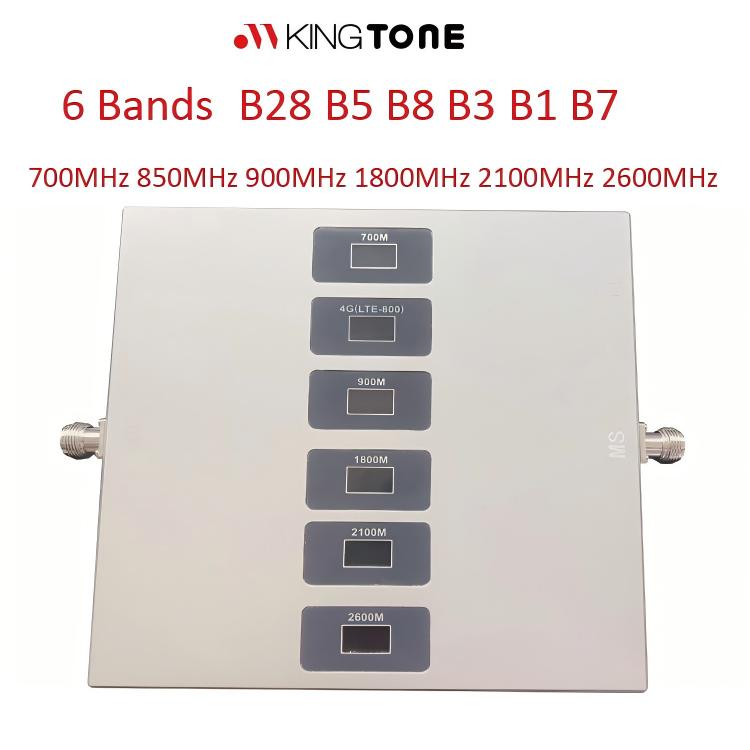
Frequency & Band Breakdown
These six bands cover the primary spectrums used by cellular carriers for voice calls and high-speed data:
- Band 1 (2100 MHz): Common for high-speed 3G and some 4G LTE.
- Band 3 (1800 MHz): A primary band for 4G LTE capacity in urban areas.
- Band 7 (2600 MHz): High-capacity 4G/5G band used heavily in dense urban environments.
- Band 8 (900 MHz): Excellent for deep indoor voice penetration and rural coverage.
- Band 20 (800 MHz): A standard band for wide-area, rural 4G LTE coverage.
- Band 28 (700 MHz): Low-frequency band with great building penetration and long-range propagation for 4G and 5G.
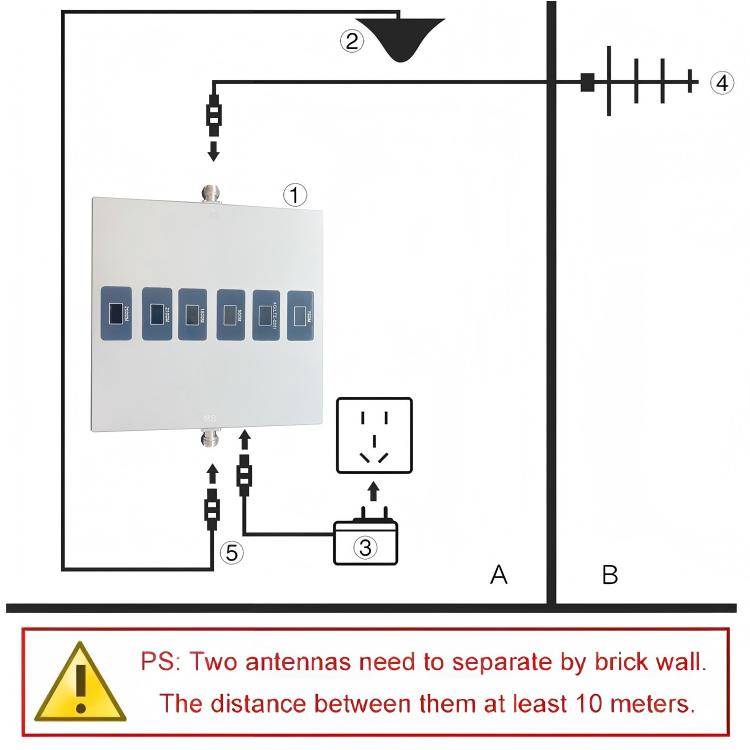
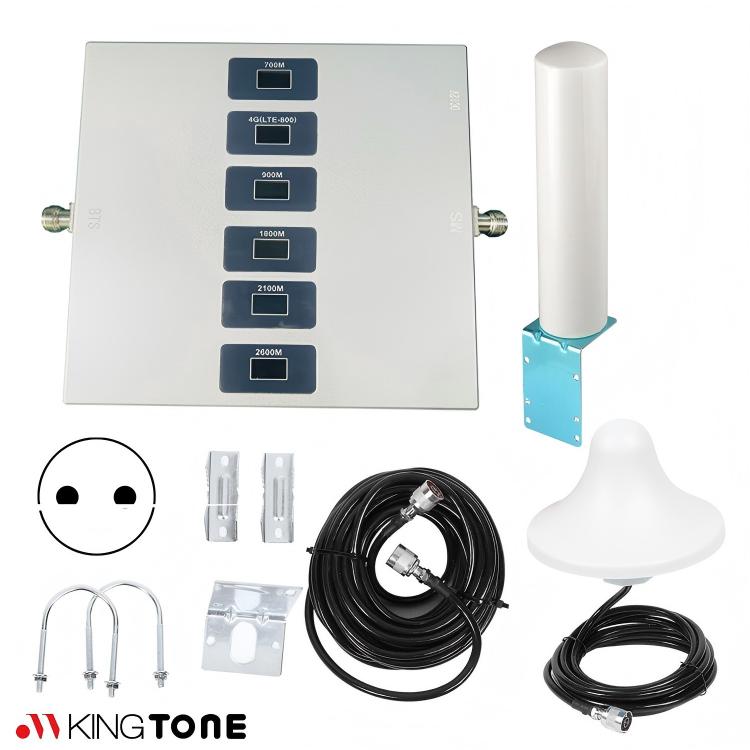
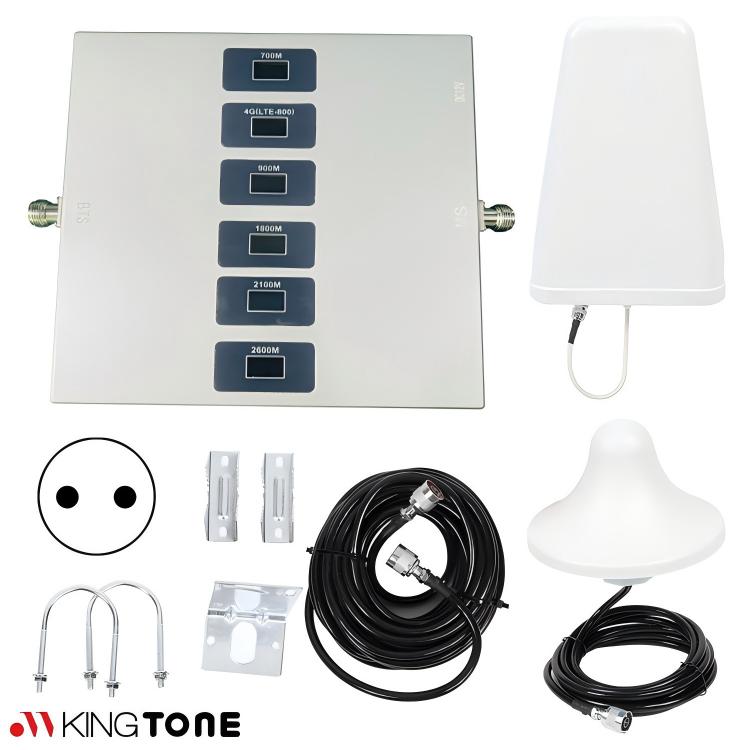
Most 6-band repeater kits on the market include the following components:
- Outdoor Antenna: A directional (Yagi or LPDA) antenna to capture the weak signal from the cell tower.
- Amplifier Unit: The main repeater box that houses the power supply and signal gain logic.
- Indoor Antenna: Panel or omnidirectional antennas used to rebroadcast the boosted signal inside your home or office.
- Coaxial Cables: High-quality runs (usually ranging from 10 to 20 meters) to connect the antennas to the booster.
Important Considerations
- Regional Frequency Compatibility: Before purchasing, ensure these bands match your specific wireless carrier’s network in your country.
- Antenna Isolation: The outdoor antenna and indoor antenna must be installed with adequate distance and physical separation (e.g., placing the outdoor antenna on the roof and the indoor antenna on the ground floor) to prevent signal oscillation (feedback).
Post time: Jun-09-2026