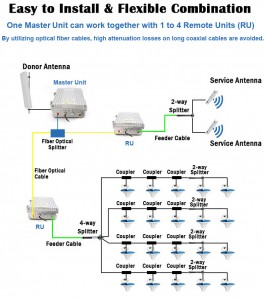
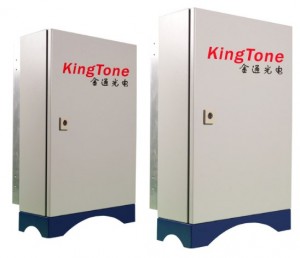
Single-Mode Fiber-Optic Repeater / Extender Mini Fiber Optical Signal Booster Fiber-Optic Amplifiers
why people study Fiber-Optic Repeater / Extender?
With the rapid development of the world mobile communication industry, the number of mobile communication users is increasing, the cellular planning is getting smaller and smaller, and the position of the optical fiber repeater is getting lower and lower. On the other hand, with the construction of high-rise cities, high-rise buildings are constantly appearing. Due to the shadowing effect of wireless transmission, blind or weak areas of mobile communication signals are often formed behind or in the middle of these high-rise buildings. In addition, during the construction of cellular mobile base stations, due to the interference problem of adjacent cells, the main lobe of the antenna radiation field pattern has a large down-tilt angle. Therefore, the middle and upper parts of high-rise buildings cannot effectively receive signals. This is why people study fiber optic repeaters.
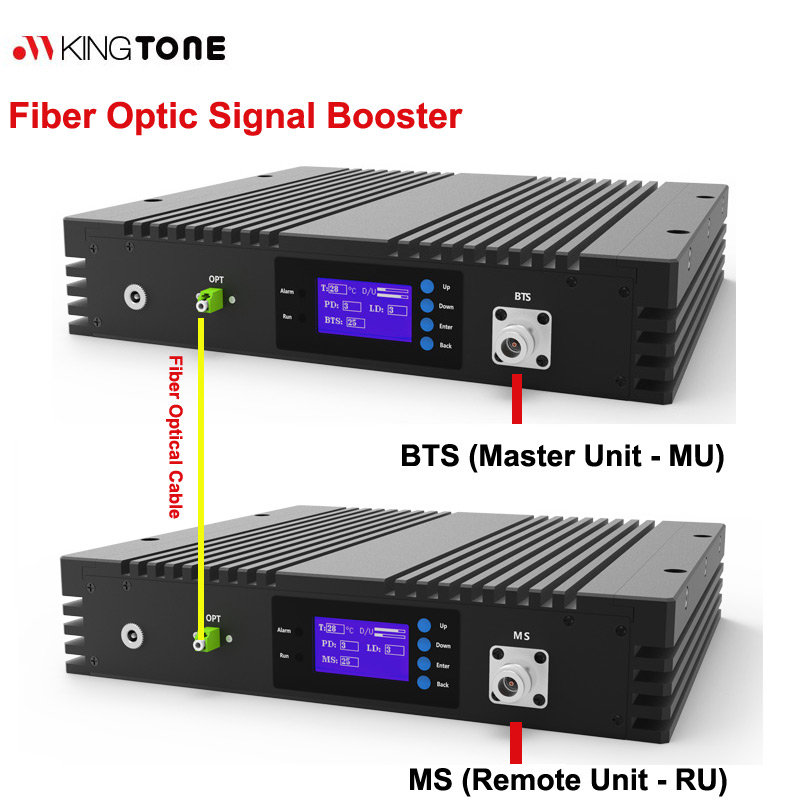
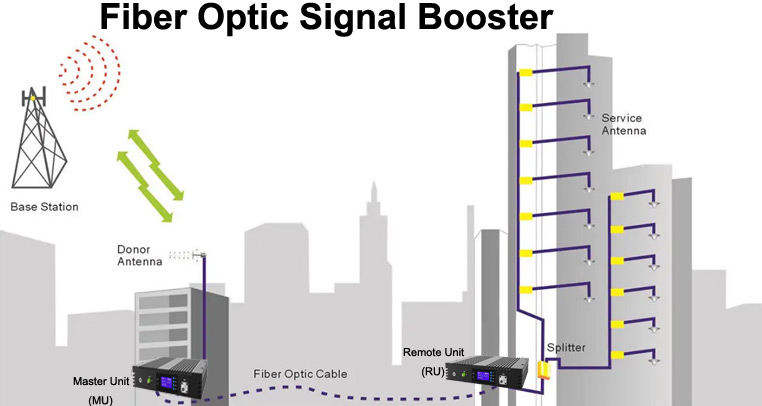
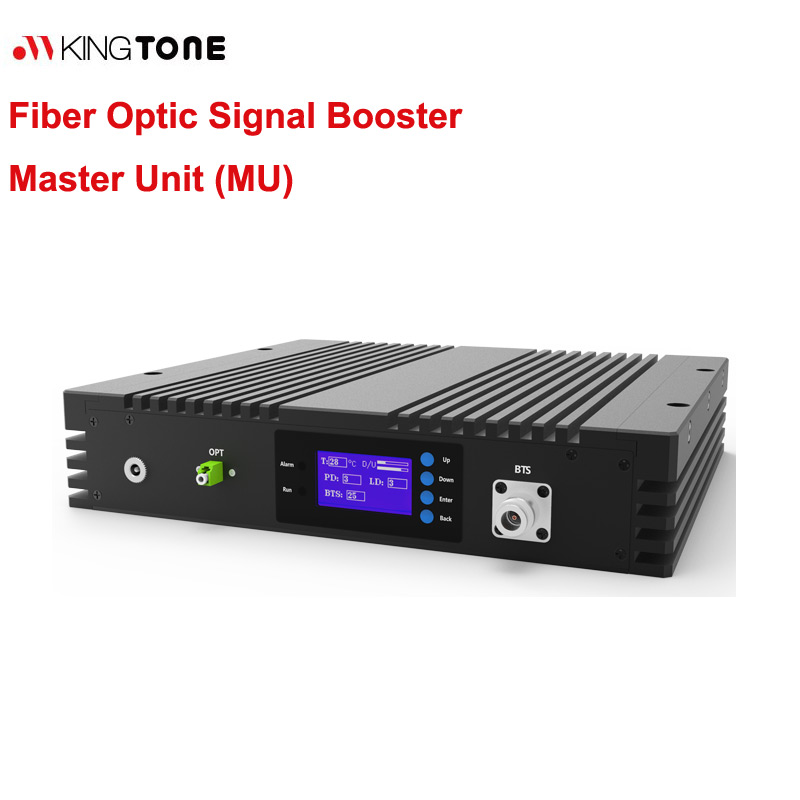
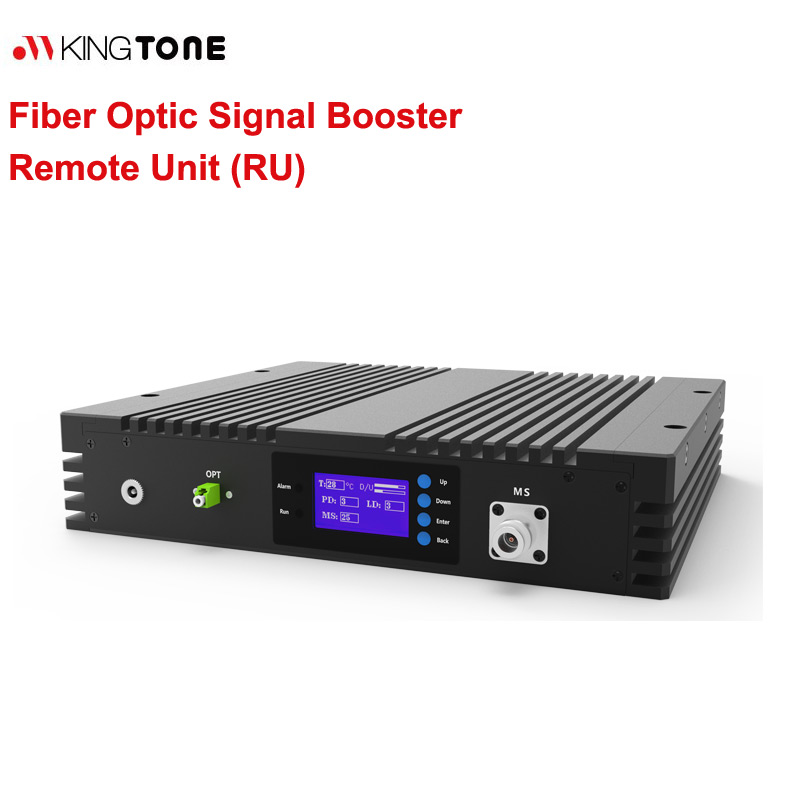
Kingtone Fiber Optic Repeaters system is designed to solve problems of weak mobile signals, which is much cheaper than adding a new Base Station (BTS). Main operation of RF Repeaters system: For the downlink, signals from BTS are fed to the Master Unit (MU). The MU then converts the RF signal to a laser signal, then feeds it to fiber to transmit to the Remote Unit (RU). RU then converts laser signal to RF signal, and uses a Power Amplifier to amplify to high power to IBS or coverage antenna. For the uplink, it is a reverse process; signals from the user’s mobile are fed to the MU’s MS port. Via a duplexer, the signal is amplified by low noise amplifier to improve signal strength. Then the signals are fed to an RF fiber optical module, then converted to laser signals, then the laser signal is transmitted to the MU, the laser signal from the RU is converted to an RF signal by an RF optical transceiver. Then the RF signals are amplified to more strength signals fed to BTS.
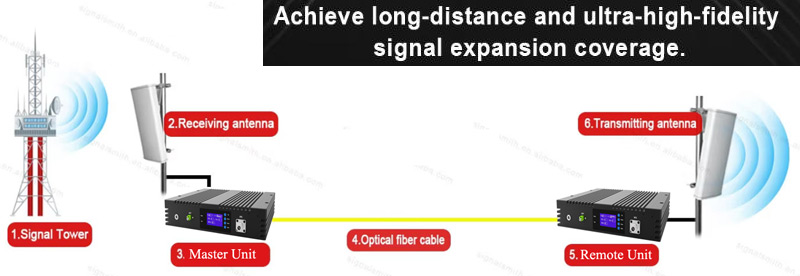
The fiber DAS Master Unit (MU) receives available outside cell signal, amplifies it, and transmits it via fiber-optic cable to up to Remote Units (RUs).
Main Features
◇ High linearity PA; High system gain;
◇ Intelligent ALC technology;
◇ Full duplex and high isolation from uplink to downlink;
◇ Automatic operation for convenient operation;
◇ Integrated technique with reliable performance;
◇ Aluminum chassis design for good heat-sink;
Applications
To expand signal coverage of fill signal blind areas where signal is weak or unavailable.
Indoor: Hotels, Exhibition Centers, Basements, Shopping Malls, Offices, Parking Lots, etc.